
Planning Your 2026 Outdoor Remodel: Budgeting for Hardscape and Lights
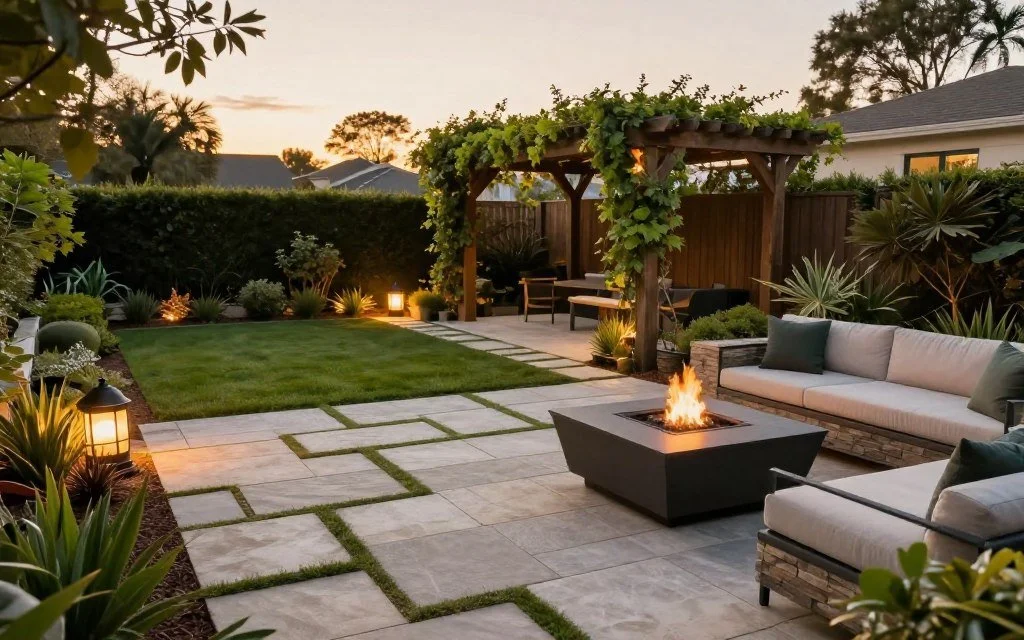
What if your backyard could become your favorite room in the house, day and night? Transforming your outdoor area requires more than just plants. It needs a solid plan and a smart budget.
Hardscape refers to the solid, built elements like patios and walkways. These features create the foundation of your living space. Adding lighting is crucial for safety and evening ambiance.
Budgeting for this project means looking at material costs and long-term value. Quality materials offer better durability and property appeal. This investment makes your yard more enjoyable.
A well-executed project turns your yard into a true extension of your home. Starting your design now for a 2026 finish allows for careful planning. You can save money and refine your ideas without rush.
Key Takeaways
Begin planning now for a 2026 project to ensure ample time for design and saving.
Hardscape elements like patios and walls form the structural foundation of your outdoor space.
Integrated lighting is essential for safety, atmosphere, and extending the use of your area after dark.
Effective budgeting balances initial material costs with the long-term value they provide.
A successful outdoor remodel significantly increases your property's appeal and your personal enjoyment.
Strategic early planning helps navigate approvals and avoids last-minute expenses.
Your yard can become a seamless, functional extension of your indoor living space.
What is Hardscape and Why is it a Smart Investment?
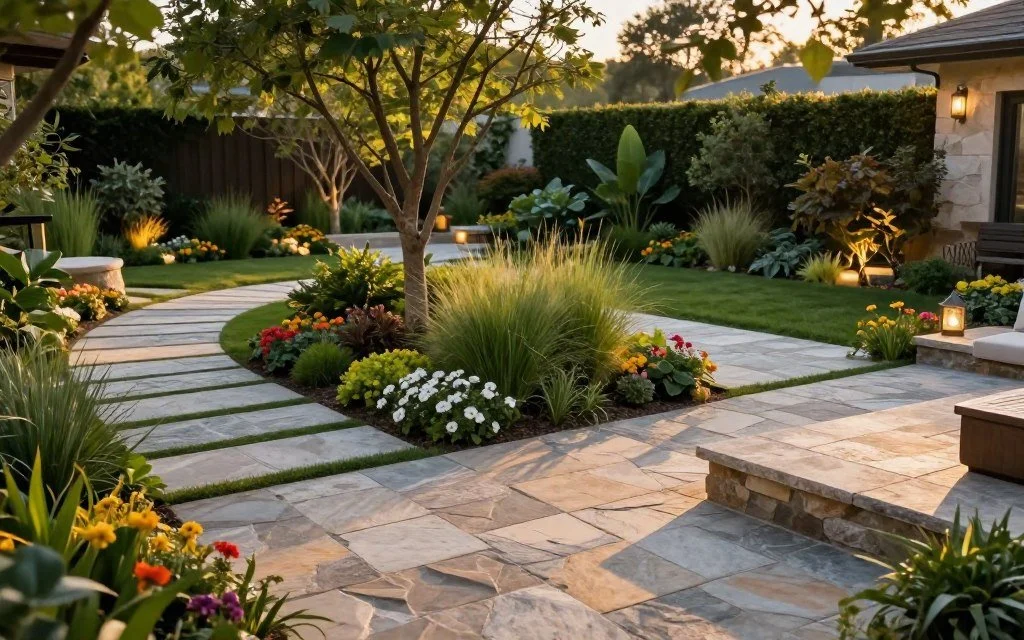
A beautiful landscape requires a balance between living plants and constructed surfaces. Understanding these two core components is the first step toward a valuable outdoor upgrade.
The solid, built parts of your yard provide the necessary framework. These non-living elements turn an empty lot into a functional living area.
Defining Hardscape vs. Softscape
Your outdoor area consists of two main types of features. Hardscape refers to all the man-made, structural components.
Think of patios, walkways, and stone walls. These features use materials like concrete, pavers, and natural stone.
Softscape includes all the horticultural, living elements. This covers your lawn, flowers, shrubs, and trees.
A successful design integrates both types. The solid surfaces create defined spaces, while the plants add softness and color.
Key Benefits: Durability, Drainage Control, and Added Value
Investing in hardscaping offers major advantages. First, these materials are incredibly durable.
Products like concrete and stone can last for decades. They need very little maintenance compared to a lawn.
Proper drainage control is another critical benefit. Features like permeable pavers and retaining walls manage water runoff.
This protects your soil from erosion. It also helps prevent flooding and foundation issues around your home.
The added value is significant. A well-designed space boosts your property's curb appeal and resale value.
More importantly, it creates an outdoor room for your personal enjoyment. This expands your usable living space without a full home addition.
Popular Hardscape Features for Outdoor Living
Many homeowners choose specific features to enhance their yards. These elements make the area more accessible and functional.
Patios: These paved areas serve as outdoor floors for dining and entertaining.
Walkways and Paths: They guide movement through your garden and connect different zones.
Fire Pits and Fireplaces: These gathering spots provide warmth and extend the use of your yard into cooler evenings.
Retaining Walls: These structures hold back soil on slopes. They also create level areas for planting or seating.
Driveways: A well-constructed driveway improves access and your home's first impression.
Specialty Structures: Features like outdoor kitchens or pergolas define spaces for cooking and relaxing.
Together, these features form the backbone of your outdoor living plan. Hardscaping is a smart investment because it reduces long-term upkeep.
It provides a permanent, functional improvement to your property's layout. You gain a beautiful and usable extension of your home.
Laying the Financial Foundation: How to Create Your Project Budget

Before you select a single paver, establishing a clear financial plan will determine the success of your entire project. A realistic budget acts as your roadmap, guiding every design choice and purchase. It ensures your dream space doesn't lead to financial strain.
This process involves more than just picking a total number. You must define your goals and understand the different types of value your investment will create. Thoughtful planning now prevents costly changes later.
Setting Your Overall Budget and Financial Goals
Start by deciding what you can comfortably afford. Be honest about your finances and set a firm maximum spend you will not exceed. This figure is your project's financial guardrail.
Next, define clear financial goals. Is your target a specific dollar amount, or a flexible range? A range can accommodate unexpected opportunities or changes during the design phase.
Allocate funds within your total budget wisely. Always prioritize core structural work first. This includes the base for patios, walkways, or retaining walls.
Decorative finishes and lighting come after these essential elements are funded. Finally, set aside a contingency fund of 10-20% for unexpected expenses. This safety net is crucial for any renovation work.
Factoring in ROI: Resale Value vs. Personal Enjoyment
Return on Investment (ROI) in outdoor remodeling has two faces. Financial ROI measures how much your project increases your property's resale value. Personal ROI measures the enjoyment and quality of life you gain.
If selling your home is a near-term goal, research comparable properties in your area. Your investment should align with local market expectations. This prevents over-improving for the neighborhood.
Universal features like a well-built patio or attractive walkways often offer the best financial appeal. They attract potential buyers by showcasing functional living areas.
For homeowners planning to stay long-term, personal ROI should be the primary guide. Your budget can focus on creating a space tailored to your family's lifestyle. The value here is measured in daily satisfaction, not just future sale price.
Balance these perspectives when setting your budget. You might allocate more to buyer-friendly features if resale is key. If personal enjoyment is the priority, invest in the amenities that will make your yard your favorite place.
Breaking Down the Costs: What Goes Into a Hardscape Budget
The final bill for your patio or walkway project is a sum of visible finishes and hidden essentials. A realistic spending plan separates costs into three clear categories. You must budget for the products you see, the work to install them, and the necessary extras that ensure longevity.
Material Costs: Pavers, Stone, Gravel, and Lighting Fixtures
Your choice of surface materials forms the largest upfront purchase. Prices vary widely based on quality, style, and your region.
Concrete pavers are a popular and cost-effective option for many driveways and patios. Natural flagstone and brick offer a classic look at a higher price point. Gravel and landscaping rock are economical for pathways and drainage areas.
Do not forget the lighting system. You need fixtures, low-voltage wiring, and a transformer. Smart controls for ambiance and safety add to the cost but offer great value.
These visible elements define the look of your outdoor space. Always get samples to see colors and textures in your own yard's light.
Labor and Professional Installation Fees
Professional labor often constitutes 40% to 60% of your total budget. This fee covers skilled work that ensures your project lasts.
Contractors handle site excavation, grading, and base installation. They expertly lay each paver or stone and complete the finishing work. Their experience prevents common errors that lead to sinking or uneven surfaces.
Installation fees depend on project complexity and contractor experience. Always get multiple detailed quotes. A clear contract should outline every phase of the work.
Often-Forgotten Expenses: Permits, Base Materials, and Extras
Many budgets fail by overlooking critical behind-the-scenes items. These costs are essential for a proper build.
First, check local permit requirements. Your town may need permits for structural walls, electrical work, or altering drainage. The contractor usually handles this, but you pay the fee.
Base materials are a non-negotiable foundation. Compactable gravel and leveling sand prevent shifting and water collection. They are crucial for any patio or walkway.
Budget for key extras like polymeric sand for joint stabilization. Sealers protect surfaces, and edge restraints keep pavers in place. Also plan for delivery fees for bulk materials and disposal costs for old debris.
Industry professionals advise buying at least 10% extra material. This covers cutting waste and allows for future repairs. Including this contingency prevents budget overruns and ensures you have what you need.
Strategic Planning: From Design Choices to DIY vs. Pro
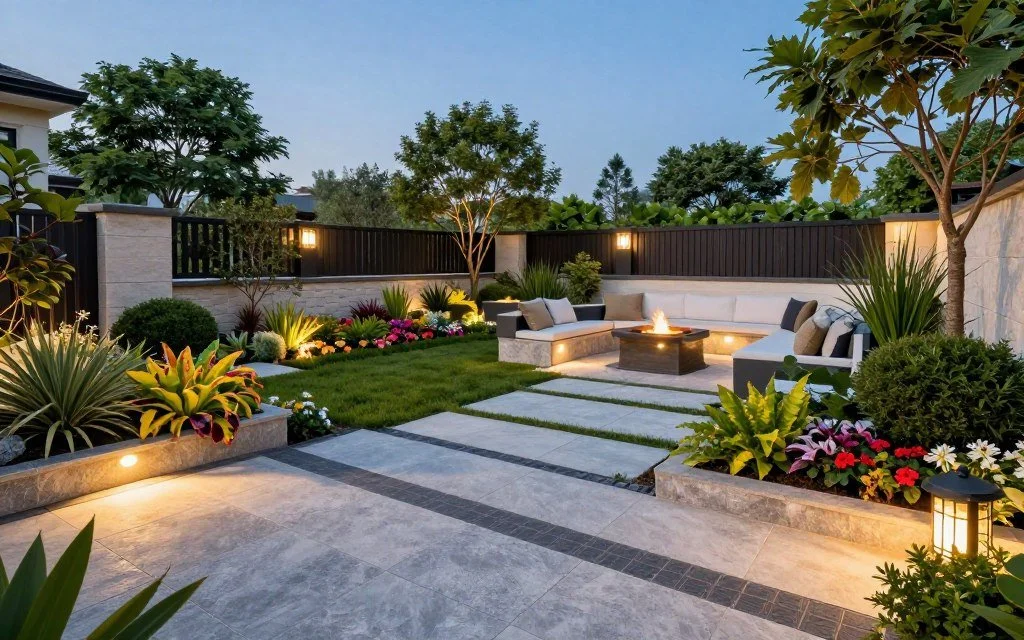
The journey from a dream design to a finished outdoor space requires careful navigation of rules, resources, and reality. This phase connects your vision to the ground, ensuring your project is beautiful, compliant, and built to last.
Strategic planning involves three key pillars. You must create a cohesive design, understand legal and community requirements, and decide who will do the work.
Creating a Cohesive Design Plan for Your Space
Start your design by looking at your entire property. Consider the scale of your backyard and the style of your home. Your new built elements should feel like a natural extension, not an add-on.
Define different zones for activities like dining, lounging, and cooking. This creates an intuitive flow for daily living. Use materials to subtly signal the purpose of each area.
Select a complementary palette for your materials. Match the color and texture of your pavers or stone to your home's exterior. This creates visual harmony across your landscape.
Integrate drainage solutions from the very start. This is a critical part of any good design. Proper planning directs water runoff away from your house and patio.
Use slopes, channel drains, or permeable surfaces to prevent pooling. Managing water protects your investment from erosion and foundation problems. A great design balances beauty with this practical function.
Navigating HOA Rules and Permit Requirements
Before any work begins, you must check the rules. Local zoning laws and building codes set the legal framework for your project. These rules often cover wall heights, property setbacks, and electrical work for lights.
Contact your city's building department early. They can tell you what permits you need. Factor this time and cost into your schedule.
If you live in a community with a Homeowners Association, review its covenants. HOAs often have strict guidelines on materials, colors, and even the types of structures allowed.
You will likely need to submit detailed plans for approval. Start this process well before your desired start date. HOA reviews can take several weeks.
Clear communication and compliance prevent costly delays or changes later. This step ensures your project has the proper access and approvals to proceed smoothly.
When to DIY and When to Hire a Professional Contractor
The choice between doing it yourself and hiring a pro depends on the project's complexity, your skills, and your budget. Use this guide to help you decide.
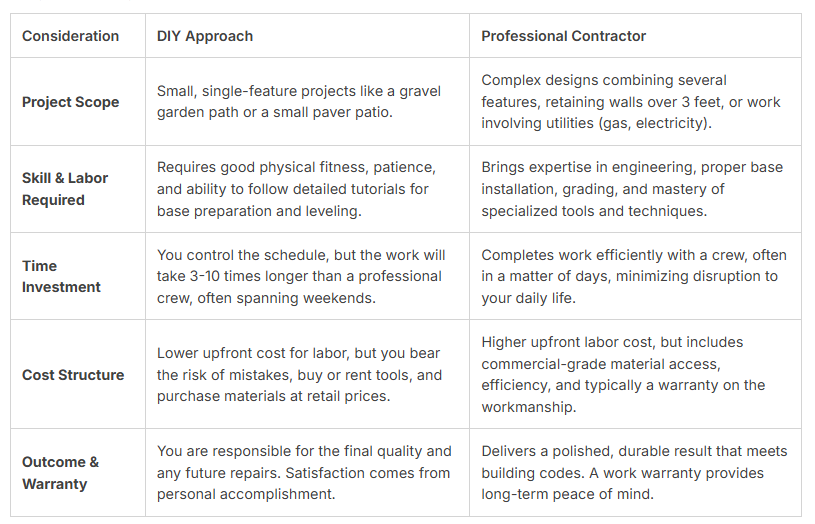
For skilled DIYers with time, simple projects can be rewarding. For anything involving major earth moving, intricate patterns, or safety concerns, a professional is the wise choice.
Contractors handle permits, navigate code issues, and solve unforeseen problems. Their work adds to your home's appeal and value through guaranteed quality.
For very complex projects, consider consulting a hardscape designer first. They can create a master plan that maximizes your space and investment. This strategic step ensures every element works together perfectly.
Preparing for Project Success: Steps to Take Before Breaking Ground
Success in any outdoor renovation is built on a foundation of meticulous preparation. This final phase transforms your plans into actionable steps. Proper groundwork prevents delays, safety issues, and neighborly disputes.
Focus on two critical areas: preparing the physical site and managing all related logistics. These tasks ensure a smooth workflow for your crew. They also protect your property and your peace of mind.
Site Preparation and Utility Location
Begin by completely clearing the work area. Remove all outdoor furniture, grills, potted plants, and garden decorations. If your design calls for it, relocate or remove any shrubs or small trees in the path.
The most critical safety step is locating underground utilities. Always call 811, the national "Call Before You Dig" number, several days before work starts. This free service marks public gas, water, and electric lines.
You must also mark private lines yourself. Flag the path of irrigation systems, landscape lighting cables, and septic lines. Contractors will avoid these marked areas to prevent costly and dangerous damage.
Finally, review the grading plan with your contractor. The site must be leveled and sloped correctly. Proper grading directs water runoff away from your home's foundation and future patio surfaces.
Managing Logistics: Access, Storage, and Neighbor Communication
Logistical planning keeps the project moving efficiently. Think through how people and materials will flow to your backyard.
Ensure clear access for crews and delivery trucks. Measure gate widths to confirm equipment can fit. Arrange for on-street parking permits if your neighborhood requires them.
Designate a specific, sturdy area for material storage. A driveway or a section of the yard protected with plywood works well. This keeps pallets of pavers or stone from damaging your lawn.
Proactive communication with neighbors is essential for good relations. Inform them about the project scope, timeline, and work hours. Give them a heads-up about potential noise, dust, and parked vehicles.
Don't forget your own household logistics. Secure pets in a safe indoor area during work hours. Plan alternate routes to enter your home if the backyard is blocked. Prepare for the temporary loss of your outdoor living space.
Before the crew arrives, verify a few final items. Ensure all necessary permits are posted visibly. Confirm your contractor has provided proof of liability insurance and licenses. Discuss the plan for daily cleanup and debris removal.
Completing these steps sets the stage for a successful build. You minimize surprises and create a safe, organized environment. This careful preparation is your final guide before your new outdoor space begins to take shape.
Conclusion: Bringing Your 2026 Outdoor Vision to Life
With thoughtful design and smart budgeting, your outdoor vision can become a beautiful reality. You now have a clear roadmap covering key steps: understanding built elements, setting a budget, breaking down costs, strategic planning, and site preparation.
Careful planning now is the cornerstone of a successful remodel. It ensures lasting value and personal satisfaction. Start by creating a realistic timeline from design inspiration to securing approvals.
A well-executed project creates a durable, functional extension of your living space. You'll enjoy reduced lawn maintenance, better drainage, and increased home value. This personalized oasis is perfect for relaxation and entertainment.
Your next steps are simple. Gather material samples, sketch designs, and obtain contractor quotes. Begin setting aside funds in a dedicated savings account.
You are well-equipped to confidently plan your outdoor transformation. Turn your 2026 vision into a tangible, enjoyable reality.
FAQ
How do I start setting a budget for my backyard renovation?
Begin by defining your financial goals and the scope of your project. Consider how you'll use the space and prioritize key features like a patio or walkway. Research material costs, such as concrete pavers or natural stone, and always set aside 10-15% of your total budget for unexpected expenses. This planning step is crucial for success.
What's the difference between hardscaping and landscaping?
Landscaping includes all living, growing elements like plants, trees, and grass (softscape). Hardscaping refers to the non-living, structural components such as patios, retaining walls, and gravel pathways. Together, they create a balanced and functional outdoor living area.
Does adding a patio or fire pit really increase my home's value?
A>Yes, well-executed hardscaping projects often offer a strong return on investment by boosting curb appeal and creating desirable outdoor living space. Features like a paver patio or an outdoor kitchen extend your home's functional area, which is attractive to future buyers and enhances your own enjoyment.
What are the biggest cost factors in a hardscaping project?
The primary costs are materials and professional installation. Material choice—like premium natural flagstone versus standard concrete—drives price. Labor for skilled craftsmanship is also significant. Don't forget to factor in expenses for base materials, drainage solutions, delivery, and any required permits for your property.
When should I hire a professional instead of doing it myself?
DIY can work for small, simple projects like a gravel garden path. For complex work involving structural integrity, drainage, or utilities—such as building retaining walls, large patios, or installing built-in lighting—hiring a qualified contractor is a smart investment. They ensure proper installation, navigate local codes, and save you time.
What steps are needed to prepare my yard before construction begins?
Proper site preparation is key. This includes marking all underground utilities, clearing the area, and ensuring equipment access. Communicate the schedule with neighbors and plan for material storage. A contractor will also grade the land to manage water runoff away from your home's foundation.
